Your cart is currently empty.
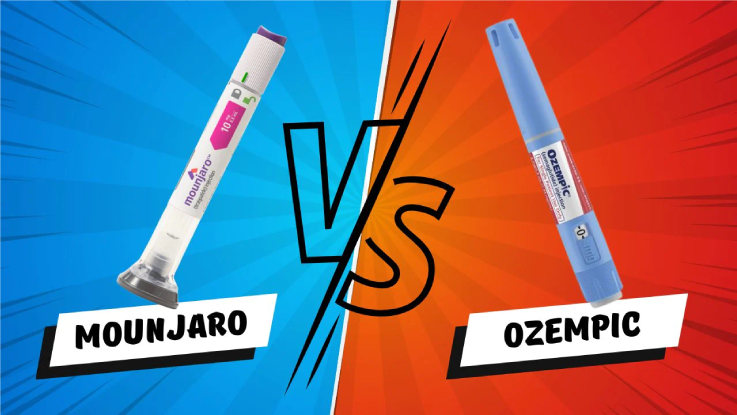
Mounjaro and Ozempic are two of the most talked-about medications in medical weight loss today. Both are GLP-1 based, both require a weekly injection, and both can lead to significant fat loss. But they are not identical—and the differences matter.
Here’s the truth about Mounjaro vs. Ozempic, including how they work, how much weight you can expect to lose, what side effects to prepare for, and where to get started.
How They Work: Semaglutide vs. Tirzepatide
- Ozempic (semaglutide) is a GLP-1 receptor agonist. It mimics the GLP-1 hormone, helping control blood sugar and appetite. It slows digestion and promotes satiety, leading to reduced calorie intake.
- Mounjaro (tirzepatide) is a dual-agonist—targeting both GLP-1 and GIP receptors. That added GIP activity enhances insulin sensitivity and appetite suppression, often making Mounjaro stronger and faster-acting.
Doctors now view tirzepatide as the more potent option, especially for patients with higher weight loss goals.
Weight Loss Results: Which Is More Effective?
While both medications lead to impressive fat loss, clinical studies and patient results show:
- Ozempic users lose around 10–15% of total body weight with consistent use over several months.
- Mounjaro users often achieve 15–20% total weight loss, and in some studies, even more.
Both work best when combined with small dietary changes and consistent use. But if you’re looking for faster, more dramatic results, Mounjaro may have the edge.
Side Effects: What to Expect
Both medications affect digestion and appetite regulation, so similar side effects can occur:
- Nausea
- Bloating or gas
- Fatigue
- Constipation or diarrhea
That said, Mounjaro may cause slightly stronger early side effects due to its dual-action mechanism. Providers usually start patients on the lowest dose and increase slowly to help the body adjust.
Working with a licensed telehealth provider like Meya ensures your treatment is safely titrated and medically supervised.
Cost Without Insurance: Brand Name vs. Compounded
Here’s the biggest barrier for many patients:
- Ozempic costs $1,200–$1,400/month retail
- Mounjaro costs $1,000–$1,500/month retail
Insurance rarely covers either unless you have type 2 diabetes.
However, telehealth providers like Meya offer compounded versions of both medications at a fraction of the price:
💰 Just $196/month — no insurance, no in-person visits, and shipping included.
It’s one of the most affordable ways to access GLP-1 and dual-agonist therapy in 2025.
So Which One Should You Choose?
Both medications are powerful tools—but your choice depends on:
- Your goals (Mounjaro may offer quicker results)
- Your sensitivity to side effects (Ozempic may be gentler)
- Your provider’s guidance
- Your budget (compounded versions make either viable)
The good news? Meya helps you work directly with a licensed doctor to decide which is the right fit.
Conclusion: Mounjaro vs Ozempic — There’s No Wrong Choice
Both medications are revolutionizing weight loss. Whether you start with Ozempic or jump into Mounjaro, what matters most is having the right guidance and consistent care.
Want real GLP-1 treatment without the $1,300/month price tag? Start your journey with Meya for just $196/month.