Your cart is currently empty.

As demand for GLP-1 medications rises, more people are exploring affordable alternatives to Ozempic—especially those without insurance coverage. But what’s the real difference between GLP-1 alternatives (like compounded semaglutide) and Ozempic itself?
Let’s compare dosage, pricing, and results so you can choose the best and safest option for your weight loss journey.
What Are GLP-1 Alternatives?
GLP-1 alternatives most commonly refer to compounded versions of semaglutide or tirzepatide—the same active ingredients used in Ozempic and Mounjaro.
These alternatives are:
- Prescribed by licensed providers
- Formulated by U.S. compounding pharmacies
- Delivered via weekly injections
- Used specifically for medical weight loss
When sourced properly, compounded GLP-1s are clinically equivalent to brand-name drugs like Ozempic.
How Affordable Is Ozempic Without Insurance?
Ozempic is a name-brand medication designed for type 2 diabetes, but often prescribed off-label for weight loss. The catch?
- Most insurance providers won’t cover Ozempic for weight loss
- Out-of-pocket cost typically ranges from $1,200 to $1,400 per month
- Manufacturer coupons don’t apply if you’re not diabetic
Even if it’s effective, Ozempic is unaffordable for most people paying cash.
Compounded Semaglutide: The Cost-Effective Alternative
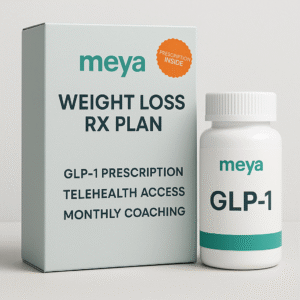
Compounded semaglutide (a GLP-1 alternative) offers the same benefits at a fraction of the price. Services like Meya provide:
- Medical consultation
- Ongoing provider supervision
- Compounded semaglutide injections
- Flat pricing: $196/month
This makes it accessible for anyone serious about losing weight—without needing insurance or waiting months for a doctor’s appointment.
Dosage Comparison
Both Ozempic and compounded GLP-1 alternatives follow a similar protocol:
- Start with a low dose (usually 0.25 mg weekly)
- Gradually titrate to higher doses (up to 2.0 mg) over time
- Adjustments based on tolerance and weight loss response
The difference? Telehealth services often provide more flexibility in titration and personalized coaching—without the red tape.
Weight Loss Results: What Can You Expect?
Whether you use Ozempic or a compounded GLP-1 alternative, the expected results are nearly identical:
- Appetite suppression within 1–2 weeks
- Weight loss begins in the first month
- Average loss of 10–15% of body weight over several months
- Improved metabolic markers and food control
There’s no magic—just medically-proven biology working in your favor.
Which Option Is Right for You?
Choose Ozempic if:
- You have type 2 diabetes
- Your insurance fully covers the cost
- You’re required to stay on a name-brand drug
Choose a GLP-1 alternative if:
- You’re focused on weight loss
- You don’t want to spend over $1,000/month
- You want faster, easier access through telehealth
Platforms like Meya make this easy—with expert support and medication shipped directly to your door.
Conclusion: Same Ingredient, Drastically Different Price
Whether you choose affordable Ozempic or a compounded GLP-1 alternative, the results can be life-changing. What matters is access, cost, and having real medical oversight. If the name on the label doesn’t matter to you—but results and affordability do—GLP-1 alternatives are the smart choice.
Want real GLP-1 treatment without the $1,300/month price tag? Start your journey with Meya for just $196/month.